
Scrambled eggs are one of the easiest breakfasts to prepare, but getting the texture just right can take a little practice. Cook them too quickly, and they can become dry or rubbery. Leave them on the heat too long, and they may lose the soft, creamy consistency that makes a good scramble so enjoyable.
Adding cottage cheese is a simple way to change the texture and nutritional profile of traditional scrambled eggs. The cheese brings moisture, a mild tangy flavor, and additional protein. As it warms with the eggs, its soft curds become part of the scramble, creating a satisfying combination of tender egg and creamy cheese.
This cottage cheese scrambled eggs recipe uses four large eggs, half a cup of cottage cheese, a little butter, and basic seasonings. It makes two servings and is easy enough for a weekday breakfast, a relaxed weekend brunch, or a quick meal when you want something filling without a long ingredient list.
You do not need special equipment or complicated techniques. The most important part is controlling the heat and removing the eggs from the skillet when they are cooked but still tender.
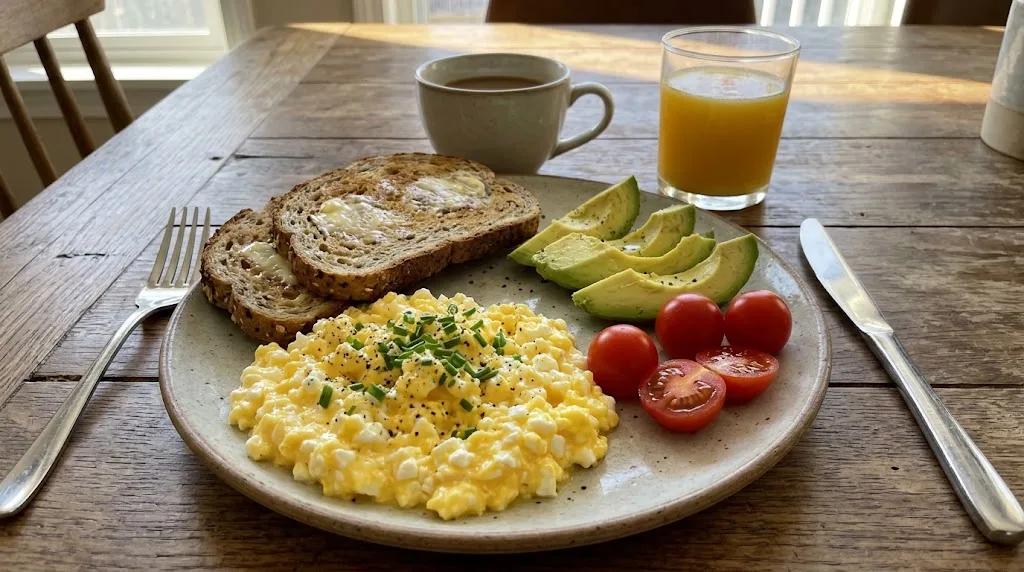
These cottage cheese scrambled eggs are a simple way to enjoy a creamy, protein-rich breakfast made with everyday ingredients.
Table of Contents
Why You’ll Love This Recipe
A simple ingredient list: You only need eggs, cottage cheese, butter, salt, and black pepper. Fresh chives are optional but add a pleasant onion flavor.
Extra protein: Eggs and cottage cheese both contribute protein. Using the ingredient quantities in this recipe provides approximately 18 grams of protein per serving, depending on the products you choose.
Creamy texture: Cottage cheese adds soft curds and moisture to the eggs. You can keep the curds visible or blend the mixture first for a smoother result.
Quick preparation: The recipe takes approximately 2 minutes to prepare and around 5 minutes to cook. Actual cooking time depends on your skillet, stove, and preferred texture.
Easy to customize: Fresh herbs, vegetables, and different cottage cheese varieties make it easy to adapt the recipe without changing its basic method.
Unlike traditional scrambled eggs, cottage cheese scrambled eggs offer an extra creamy texture and a satisfying boost of protein.
Ingredients You’ll Need
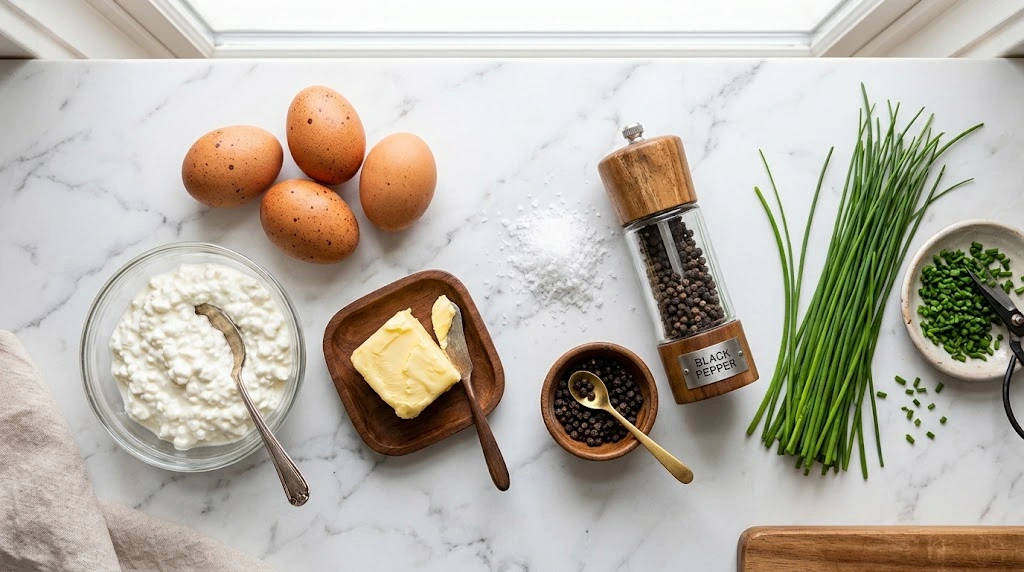
You only need a handful of everyday ingredients to make this breakfast.
Essential Ingredients
4 large eggs
Large eggs form the base of the recipe. They provide structure, flavor, and most of the scramble’s familiar texture. Bring them out of the refrigerator shortly before cooking if you prefer, although room-temperature eggs are not essential.
1/2 cup cottage cheese
Cottage cheese adds moisture, soft curds, and extra protein. Both 2% and 4% milkfat varieties work. Small-curd cottage cheese distributes more evenly through the eggs, while large-curd varieties create more noticeable pockets of cheese.
1 teaspoon unsalted butter
Butter coats the skillet and adds a mild, savory flavor. Unsalted butter gives you more control over the amount of salt in the finished dish.
Salt and black pepper, to taste
Season the eggs according to your preference. Remember that cottage cheese can already contain a considerable amount of sodium, so start with a small amount of salt.
Optional Ingredient
Fresh chives
Finely chopped chives add a fresh, delicate onion flavor. Sprinkle them over the eggs just before serving for the best color and flavor.
Equipment You’ll Need
- 8- to 10-inch non-stick skillet: A good non-stick surface makes it easier to fold and serve the soft eggs.
- Medium mixing bowl: Large enough to combine the eggs and cottage cheese.
- Whisk or fork: Used to break up the eggs and distribute the cottage cheese.
- Silicone spatula: Helps move the eggs gently across the skillet without scratching the surface.
How to Make Cottage Cheese Scrambled Eggs
Follow these steps for a soft scramble with evenly distributed cottage cheese.
Making cottage cheese scrambled eggs is easy when you follow these six simple cooking steps.
Step 1: Whisk the Eggs and Cottage Cheese
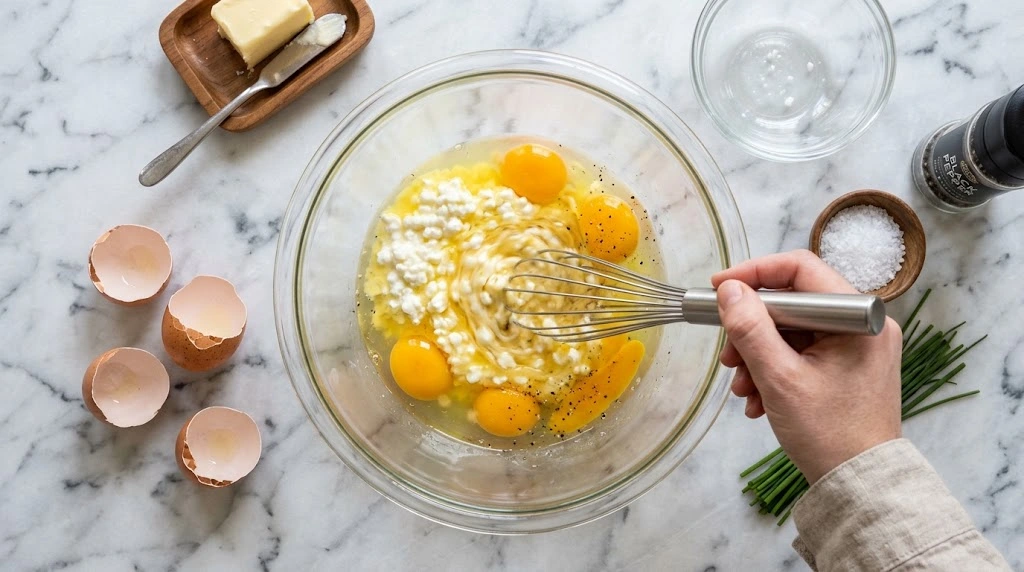
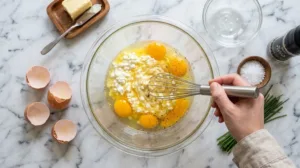
Crack the four eggs into a medium mixing bowl. Add the cottage cheese, a little salt, and black pepper.
Whisk for approximately 30 to 45 seconds, until the yolks and whites are combined. The cottage cheese curds do not need to disappear completely. A few visible curds will give the finished eggs their characteristic texture.
If you prefer a smoother consistency, blend the mixture briefly before cooking.
Step 2: Melt the Butter
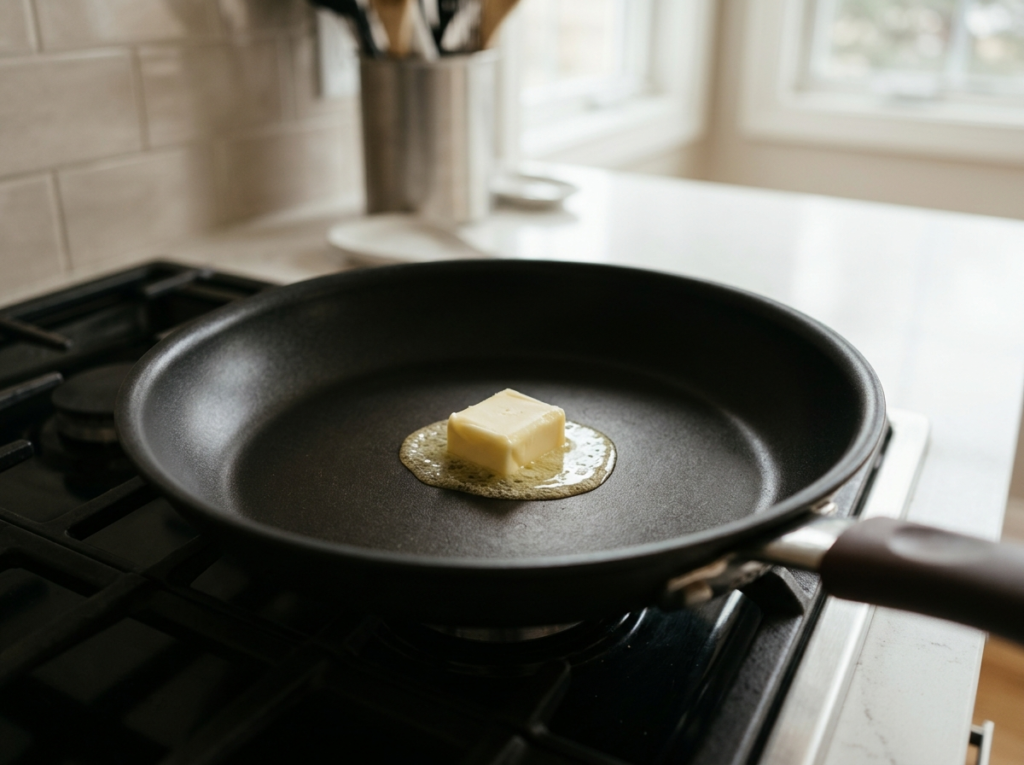
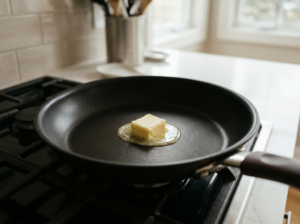
Place a non-stick skillet over low to medium-low heat. Add the teaspoon of butter and allow it to melt.
Tilt the skillet gently so the butter coats the bottom. Avoid letting it brown or burn.
Step 3: Add the Egg Mixture
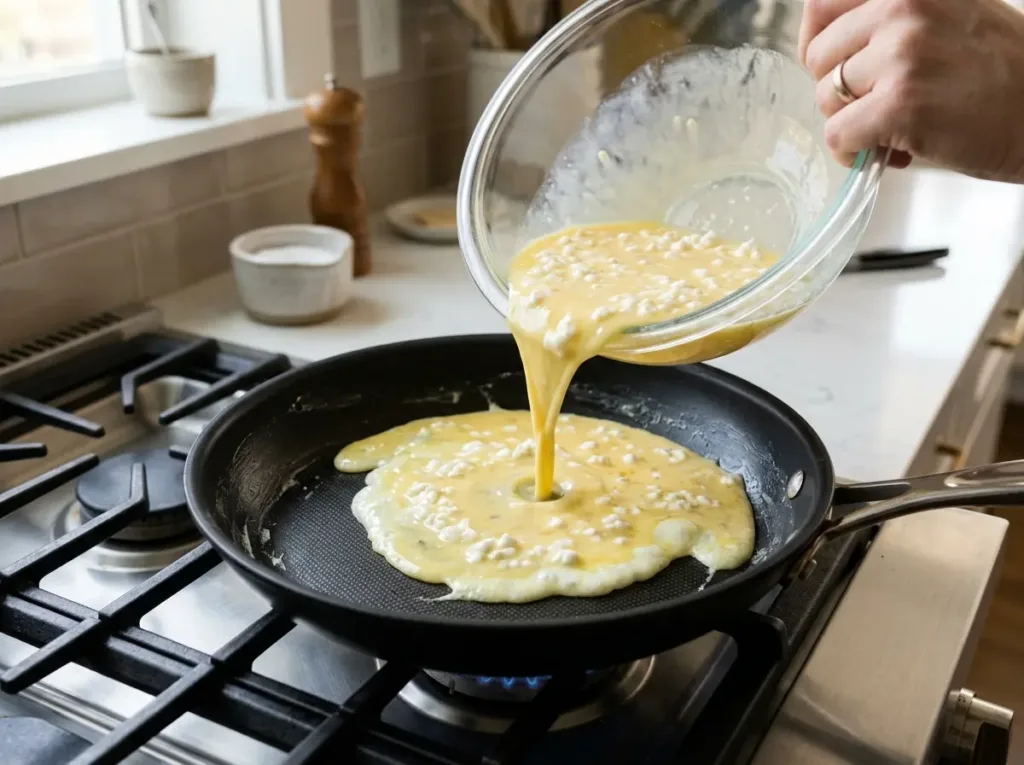
Pour the egg and cottage cheese mixture into the warm skillet.
Allow it to sit briefly, until the edges begin to set. This usually takes around 20 to 30 seconds, but watch the eggs rather than relying only on the clock.
Step 4: Fold the Eggs Gently
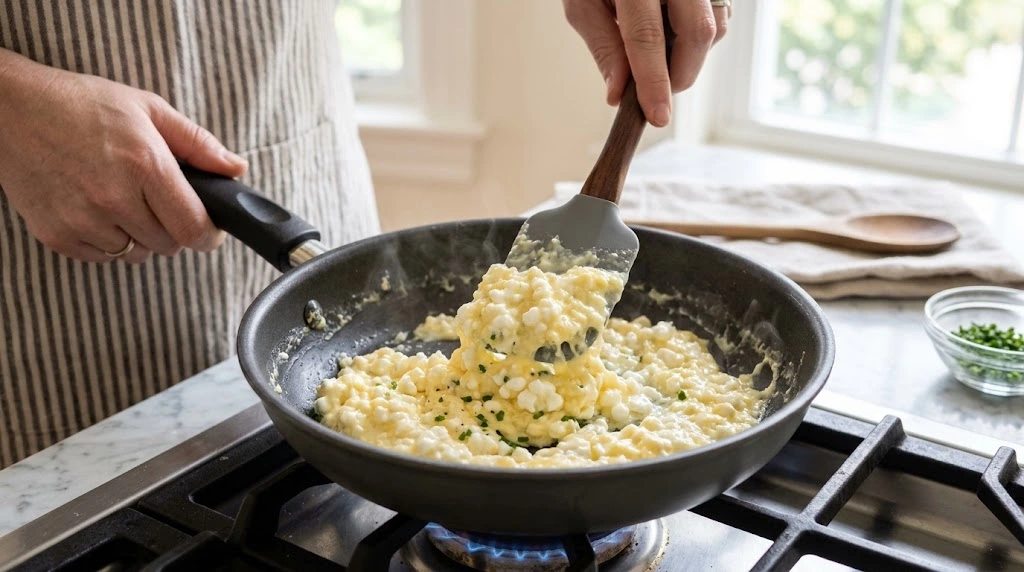
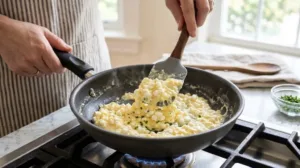
Using a silicone spatula, slowly push the eggs from the outer edges toward the center of the skillet.
Tilt the pan slightly when needed so uncooked egg can flow into the empty spaces. Continue with gentle sweeping and folding motions.
The eggs will gradually form soft curds. Avoid stirring too aggressively if you want larger, tender pieces.
Step 5: Finish Cooking
Continue cooking until the eggs are set and no longer runny, while remaining soft and moist.
Remove the skillet from the heat as soon as they reach your preferred consistency. Residual heat will continue cooking the eggs briefly.
For food safety, scrambled eggs should be fully cooked rather than runny.
Step 6: Garnish and Serve
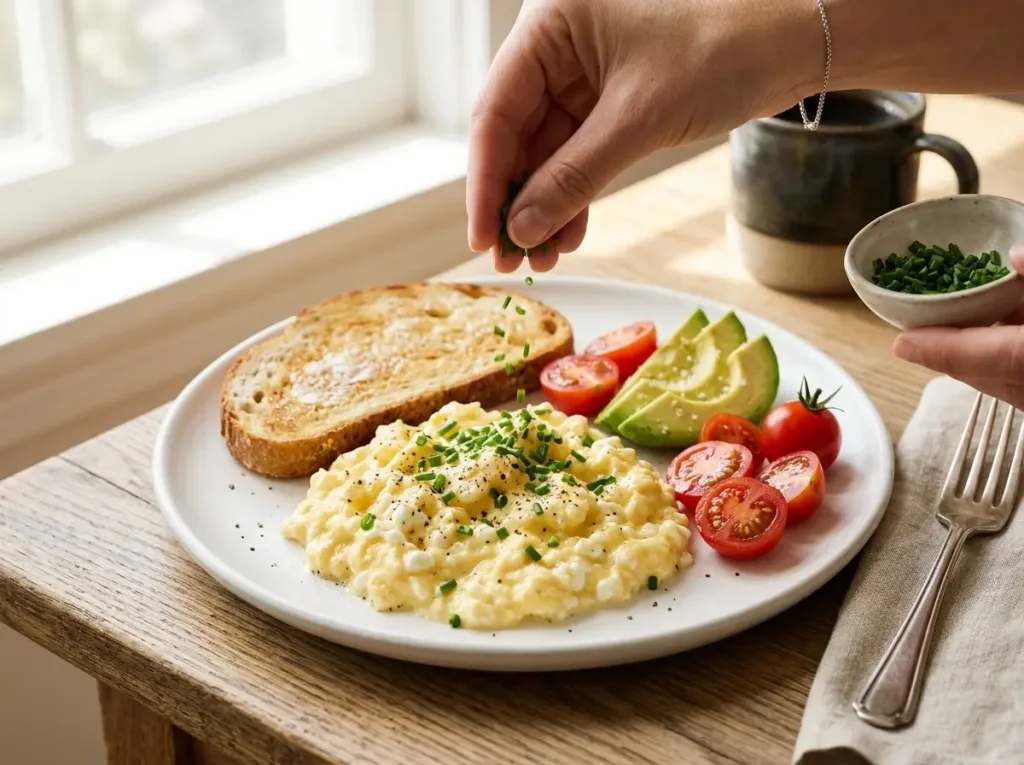
Transfer the eggs to plates immediately.
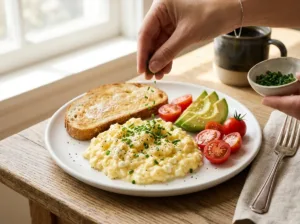
Finish with freshly chopped chives and a little black pepper if desired. Serve warm with toast, avocado, tomatoes, or your favorite breakfast sides.
Tips for Creamy Scrambled Eggs
Use gentle heat. Eggs cook quickly, so a low or medium-low setting gives you more control. High heat can make the curds firm too quickly and produce a less tender result.
Choose your preferred cottage cheese texture. Small curds blend more easily into the eggs. Large curds remain more visible and create distinct pockets of cheese.
Do not overcook the mixture. Watch the appearance of the eggs as they cook. They should be set but still moist when removed from the skillet.
Use a suitable spatula. A flexible silicone spatula helps you fold the eggs without breaking them into very small pieces.
Adjust the seasoning gradually. Cottage cheese brands differ in salt content. Taste the finished dish before adding extra salt.
Try blending for a smoother scramble. If you dislike the texture of cottage cheese curds, briefly blend the eggs and cheese before adding them to the skillet.
Common Mistakes to Avoid
Cooking Over High Heat
High heat makes it harder to control the texture of scrambled eggs. The outside can cook quickly while the rest of the mixture is still setting. Use low to medium-low heat and adjust as necessary.
Leaving the Eggs in the Skillet Too Long
The eggs continue cooking briefly after the pan is removed from the burner. Transfer them to plates once they are fully set and still moist.
Stirring Too Quickly
Rapid stirring can break the curds into very small pieces. Slow, deliberate folds create a more substantial scramble.
Adding Too Much Salt
Some cottage cheese products are already salty. Season lightly at first and adjust after cooking.
Using a Skillet That Is Too Hot
A very hot pan can make the eggs stick or cook unevenly. Melt the butter gently before adding the mixture.
Variations and Substitutions
One of the advantages of this recipe is how easily you can adapt it.
Choose Your Cottage Cheese
Whole-milk cottage cheese, often labeled 4% milkfat, gives the recipe a richer flavor. Reduced-fat 2% cottage cheese is also suitable and is the variety used for the nutritional estimate below.
Non-fat cottage cheese can be used, although the result may have a different texture and flavor.
Add Fresh Herbs
Chives are a natural choice, but you can also try parsley, dill, or tarragon. Add delicate fresh herbs near the end of cooking or sprinkle them over the finished eggs.
Add Vegetables
For a more substantial breakfast, sauté a small amount of chopped bell pepper, spinach, or mushrooms before adding the egg mixture.
Cook vegetables until their excess moisture has evaporated. This helps prevent the finished scramble from becoming watery.
Add More Flavor
A little paprika, garlic powder, or red pepper flakes can change the flavor without making the preparation more complicated.
You can also finish the dish with a small amount of grated cheese, keeping in mind that this changes the nutritional values.
Use Lactose-Free Cottage Cheese
Lactose-free cottage cheese is still a dairy product. It can be used in this recipe by following the same cooking method.
Dairy-Free Alternative
For a dairy-free version, use a suitable plant-based alternative to cottage cheese and replace the butter with olive oil or plant-based butter. The flavor, protein content, and texture will differ from the original recipe.
What to Serve with Cottage Cheese Scrambled Eggs
These eggs are satisfying on their own, but a few simple sides can turn them into a complete breakfast plate.
Whole-grain toast: Toasted sourdough, rye, or whole-wheat bread provides a crisp contrast to the soft eggs.
Avocado: Sliced avocado adds a creamy texture and mild flavor. A little lemon juice and black pepper work well as seasoning.
Cherry tomatoes: Fresh tomatoes add color and a light acidity that balances the richness of the eggs.
Fresh fruit: Strawberries, blueberries, melon, or orange slices bring a naturally sweet element to the plate.
Breakfast potatoes: Roasted or pan-fried potatoes are a good choice when you want a more substantial brunch.
For a simple breakfast, serve the eggs with toast and sliced tomatoes. For a larger weekend meal, add avocado and fresh fruit.
Storage and Reheating
Scrambled eggs are best served immediately because their texture is most tender straight from the skillet.
If you have leftovers, place them in a shallow, airtight container and refrigerate promptly. Do not leave cooked eggs at room temperature for more than two hours.
Keep the refrigerator at or below 40°F (4°C). Properly handled cooked egg dishes can generally be refrigerated for 3 to 4 days.
To reheat, warm the eggs gently in a covered skillet or microwave-safe container. Stir as needed to heat evenly. For food safety, reheat leftovers thoroughly to 165°F (74°C).
The texture may become firmer after refrigeration and reheating. For that reason, preparing only the amount you plan to eat is usually the best option.
Frequently Asked Questions
Can you add cottage cheese directly to scrambled eggs?
Yes. You can whisk cottage cheese directly into raw eggs before cooking. The curds will remain partly visible unless you blend the mixture first.
How much protein is in cottage cheese scrambled eggs?
Using four large eggs and half a cup of 2% cottage cheese provides approximately 36 grams of protein for the full recipe, or about 18 grams per serving. The exact amount depends on the eggs and cottage cheese brand.
Can you taste the cottage cheese?
Yes, but its flavor is generally mild. It adds a subtle tanginess and a creamy quality to the eggs. The final flavor depends on the type of cottage cheese you use.
Should you blend cottage cheese before adding it to eggs?
No. Blending is optional. Whisking is enough if you like visible curds. Blend briefly if you prefer a smoother mixture.
Which cottage cheese is best for scrambled eggs?
Small-curd 2% or 4% cottage cheese both work well. Choose 4% for a richer result or 2% for the version used in the nutritional estimate.
Can you prepare the egg mixture ahead of time?
For the best quality and food safety, prepare and cook the eggs shortly before serving. If you combine raw eggs and cottage cheese in advance, keep the mixture refrigerated and cook it within 24 hours. Do not leave it at room temperature.
Can you use lactose-free cottage cheese?
Yes. Lactose-free cottage cheese is still dairy, but it can be used in the same way as regular cottage cheese.
Can you make this recipe without butter?
Yes. You can replace the butter with a small amount of olive oil or another cooking fat suitable for your pan. The flavor and nutritional values will change slightly.
Final Thoughts
Cottage cheese scrambled eggs are an easy way to give a familiar breakfast a different texture and a little extra protein. With four eggs, half a cup of cottage cheese, and a few basic seasonings, you can prepare a satisfying meal without complicated steps.
The key is to cook gently, fold the eggs rather than stirring them aggressively, and serve them as soon as they are fully cooked and tender.
Try them with toast, avocado, or fresh tomatoes, and adjust the herbs and seasonings to suit your taste. If you make this recipe, share how you served it in the comments.

Cottage Cheese Scrambled Eggs
Equipment
- 1 nonstick skillet, 8-inch to 10-inch
- 1 Medium mixing bowl
- 1 Whisk
- 1 Flexible silicone spatula
Ingredients
- 4 Unit Large eggs
- 1/2 Cup Cottage cheese 2% or 4% milkfat
- 1 Tsp Unsalted butter
- 1/4 Tsp Sea salt
- 1/8 Tsp Freshly cracked black pepper
- 1 Tbsp Chopped fresh chives optional
Instructions
- Whisk the Eggs and Cottage CheeseIn a medium glass bowl, crack 4 large eggs. Add 1/2 cup cottage cheese, 1/4 teaspoon salt, and a pinch of black pepper. Whisk vigorously for 30 to 45 seconds until the mixture is uniform and bubbly. Small cottage cheese curds will remain visible, which is desired.

- Melt the ButterPlace a non-stick skillet over low heat. Add 1 teaspoon of unsalted butter and let it melt gently, coating the bottom of the skillet. Do not allow the butter to brown.

- Add the Egg MixturePour the egg and cottage cheese mixture into the skillet. Let it sit undisturbed for a few seconds until the edges begin to set.
- Fold the Eggs GentlyUsing a silicone spatula, gently push the eggs from the edges toward the center, allowing the uncooked mixture to flow into the empty spaces. Continue folding slowly to create soft, creamy curds.
- Finish CookingContinue cooking over low heat until the eggs are mostly set but still slightly glossy and moist. Remove the skillet from the heat before they become dry, as residual heat will finish cooking them.
- Garnish and ServePlate the eggs immediately onto warm plates. Top with finely chopped fresh chives and an extra sprinkle of cracked black pepper.