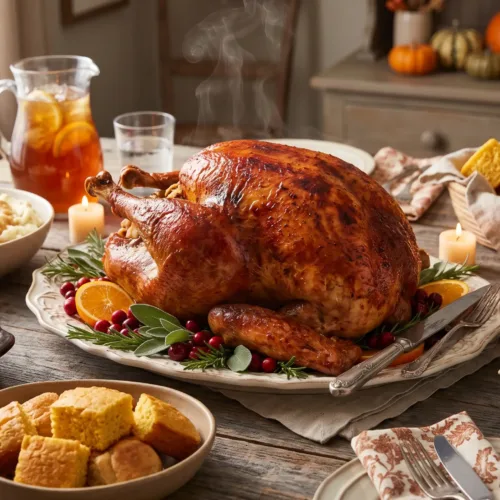
A traditional Thanksgiving roast turkey is far more than just a main dish: it is the undisputed centerpiece, the beating heart of the Thanksgiving table across North America. Around it gather family memories, shared laughter, and the warmth of a festive feast. Achieving a roast turkey that is gorgeously golden and crispy on the outside while remaining exceptionally juicy and tender on the inside is a precise art, yet deeply rewarding.
In this comprehensive guide designed for passionate home cooks and food enthusiasts, we will explore all the secrets to selecting the finest bird, understanding rigorous quality standards, maintaining pure and ethical dietary practices (free from alcohol, or uncertified animal fats), and following step-by-step instructions to deliver a masterclass meal. Mastering a traditional Thanksgiving roast turkey at home is effortless when you combine clean ingredients with accurate temperature control.
Gathering around the table to carve a golden, freshly roasted Thanksgiving turkey surrounded by family and classic homemade sides.
A traditional Thanksgiving roast turkey is far more than just a holiday main dish—it is the undisputed centerpiece and beating heart of the Thanksgiving table across North America. With crisp, herb-buttered golden skin and tender, juicy meat infused with fresh sage, rosemary, and aromatics, making a traditional Thanksgiving roast turkey at home is effortless when you follow the right roasting temperature and resting window.
1. Secrets to Choosing the Right Turkey: Breeds, Regions, and Sizing
The success of your traditional Thanksgiving roast turkey begins long before you turn on the oven success of your centerpiece begins long before you turn on the oven: it relies entirely on selecting the right bird. Master chefs know that the structure of the meat and its natural juiciness depend directly on how the animal was raised, its diet, and its geographical origin.
The Ideal Sizing for Your Guests
General Rule: Plan for approximately 1 lb to 1.5 lb (450 g to 680 g) of raw turkey per person.
For a family gathering of 6 to 8 people, a 12 to 15-pound turkey (roughly 5.5 kg to 7 kg) is ideal. It provides an optimal balance of white and dark meat while cooking evenly throughout.
Choosing the right weight is the first step toward a tender, evenly cooked traditional Thanksgiving roast turkey.
Regions of Excellence for Poultry Production
Across the United States and Canada, specific regions stand out for their exceptional poultry farming standards:
The American Midwest (Minnesota, Indiana, Iowa): Widely considered the historical cradle of premium turkey farming, benefiting from vast agricultural lands and a pure grain-based diet (selected corn and soybeans).
Ontario and Quebec (Canada): Renowned for family-run poultry farms adhering to rigorous animal welfare standards and full traceability, ensuring wholesome, naturally raised birds.
Turkey Breeds: Commercial vs. Heritage Breeds
Commercial Breeds (Broad-Breasted White): These are the most common in the marketplace. Their morphology yields an abundant proportion of tender white meat. When properly basted during cooking, they remain incredibly succulent.
Heritage Breeds (Narragansett, Bourbon Red, Bronze): Closer to wild turkeys, these traditional heritage breeds feature firmer meat packed with rustic, authentic flavor. However, they require closer attention during roasting because they contain less natural fat. Both commercial and heritage birds can yield an extraordinary traditional Thanksgiving roast turkey when matched with proper basting.
Reviewing the weight and variety of fresh, packaged turkeys in a farm shop’s refrigerated display before selecting the perfect bird for Thanksgiving.
2. Quality Standards & Clean Sourcing
To ensure your meal strictly respects wholesome, ethical, and conscious dietary standards (such as clean animal sourcing, pure preparation methods, and the complete absence of pork derivatives, cooking alcohol, or uncertified animal fats), keep these criteria in mind when purchasing:
Certification and Traceability: Opt for turkeys labeled as certified clean-sourced or sourced from independent farms guaranteeing a 100% vegetarian feed (free from animal by-products).
Freshness (Fresh vs. Frozen): A fresh, never-frozen turkey better preserves muscle fiber structure, resulting in unmatched tenderness after roasting. If using a frozen turkey, plan for a slow thaw in the refrigerator (allow 24 hours per 4 to 5 pounds).
Fat Selection: Use exclusively pure butter (or extra-virgin olive oil) for basting. Avoid commercial broth cubes containing uncertified poultry fats or questionable animal-derived flavor enhancers. Using pure unsalted butter and certified vegetable broth keeps your traditional Thanksgiving roast turkey clean-sourced and deeply flavorful.
1 cup (2 sticks) unsalted butter, softened to room temperature
1 tbsp extra-virgin olive oil
2 tbsp fresh sage, finely chopped
2 tbsp fresh thyme, minced
1 tbsp fresh rosemary, minced
4 cloves garlic, crushed and finely minced
1 tbsp kosher salt
1.5 tsp freshly ground black pepper
For the Aromatic Cavity:
1 medium yellow onion, quartered
1 apple (Granny Smith or Honeycrisp), cut into wedges
2 stalks celery, roughly chopped
4 sprigs fresh thyme and 3 sprigs fresh rosemary
1 cup water or pure certified vegetable broth (for the roasting pan base)
4. Step-by-Step Preparation Guide
Step 1: Cleaning and Dry-Chilling the Poultry
The day before roasting, remove the turkey from its packaging, empty the internal cavity, and rinse the bird gently with cold water. Dry it thoroughly using paper towels. Perfect surface dryness is the absolute secret to achieving a golden, ultra-crispy skin. Place the turkey on a wire rack set inside a rimmed baking sheet and let it chill uncovered in the refrigerator overnight (the dry-brining and dry-chilling method). This overnight chill is the ultimate secret to achieving golden, ultra-crispy skin on a traditional Thanksgiving roast turkey.
Step 2: Herb Butter Preparation and Cavity Aromatics
Spreading freshly mixed sage, thyme, and rosemary butter directly beneath the turkey breast skin to lock in moisture and flavor during roasting.
In a medium bowl, combine the softened butter, olive oil, chopped sage, thyme, minced rosemary, garlic, kosher salt, and black pepper until a smooth paste forms.
Take the turkey out of the refrigerator 1 hour before roasting. Carefully slide your fingers between the skin and the meat of the breast to loosen the skin without tearing it. Massaging compound herb butter directly under the skin infuses every bite of your traditional Thanksgiving roast turkey with rich aroma. Spread half of the herb butter directly onto the meat beneath the skin. Rub the remaining butter all over the exterior surface of the turkey. Stuff the internal cavity with onion wedges, apple, celery, and whole herb sprigs (this imparts subtle internal moisture and fragrance).
Stuffing the cavity of the herb-butter-coated turkey with fresh apples, onions, celery, and whole herbs to infuse moisture and aroma while roasting.
Step 3: Oven Roasting and Temperature Management
Preheat your oven to 325°F (165°C). Place the turkey on a rack inside a large roasting pan. Pour the cup of water or vegetable broth into the bottom of the pan to prevent drippings from burning. Slow-roasting a traditional Thanksgiving roast turkey at 325°F ensures the dark meat cooks through while the breast stays juicy.
Setting the oven controls to 325°F (165°C) and adjusting the timer to 3 hours 15 minutes, with the open oven and roasting pan ready below.
Estimated Roasting Time: Allow approximately 13 to 15 minutes per pound at 325°F for a stuffed turkey. For a 13-lb turkey, total roasting time will hover around 3 to 3.5 hours.
The Internal Temperature Secret: Do not rely solely on the clock. Insert an instant-read thermometer into the thickest part of the thigh (without touching the bone) and the center of the breast. The poultry is perfectly cooked when the internal temperature reaches 165°F (74°C) in the breast and 175°F (79°C) in the thigh.
Step 4: Basting and the Crucial Resting Period
Using an instant-read thermometer to verify the turkey has reached a safe, juicy internal temperature—165°F in the breast and 175°F in the thigh.
Every 45 minutes, open the oven and generously baste the turkey with the pan juices pooled at the bottom. If the skin browns too quickly during roasting, loosely tent the breast with a sheet of aluminum foil.
Once the target temperature is reached, remove the turkey from the oven. Do not carve it immediately! Transfer it to a clean cutting board, tent loosely with foil, and let it rest for 30 to 45 minutes. This resting window allows the muscle fibers to relax and the juices to redistribute evenly throughout the meat, ensuring incredible tenderness in every slice. Never skip this resting window if you want your traditional Thanksgiving roast turkey to stay moist when carved.
Letting the roasted turkey rest for 30 to 45 minutes on a clean cutting board under a loose foil tent so the juices redistribute evenly before slicing.
5. Nutritional Balance and Health Benefits of Turkey
Pairing your traditional Thanksgiving roast turkey with vibrant, homemade holiday sides creates a balanced feast that feels both classic and wholesome.
Beyond its status as a holiday icon, roast turkey offers exceptional nutritional advantages, especially when prepared with healthy fats and natural aromatics:
High-Quality Protein: Turkey meat (particularly skinless breast meat) is an outstanding source of lean protein, essential for muscle recovery and long-lasting satiety.
Rich in Micronutrients: It is packed with B-complex vitamins (notably B6 and B12), selenium, and zinc, supporting immune health and energy metabolism.
Calorie Management: By utilizing olive oil and moderate butter combined with herbal aromatics rather than heavy industrial gravies, this dish fits seamlessly into a balanced and mindful lifestyle.
6. Professional Carving & Leftover Ideas
After separating the legs and wings, slice the rested turkey breast cleanly on a slight angle parallel to the rib cage for tender, uniform servings. Proper carving preserves the presentation and juiciness of your traditional Thanksgiving roast turkey from the first slice to the last.
To serve your turkey like a seasoned professional at your dinner party:
Remove the drumsticks and thighs by cutting through the hip joint.
Separate the wings from the body.
Slice the breast meat horizontally on a slant, parallel to the rib cage bone, to create clean, uniform slices.
What to Do with Leftovers?
Leftover turkey lends itself wonderfully to versatile meals for the following days:
Gourmet sandwiches on artisan sourdough bread with cranberry spread and melted cheese.
Comforting turkey and root vegetable soup with homemade broth.
Turn next-day roast turkey leftovers into a toasted artisan sourdough melt with cranberry spread and melted cheese or a comforting bowl of root vegetable soup.
Whether it is your first time hosting or an annual family tradition, this traditional Thanksgiving roast turkey guarantees tender, flavorful slices every single year.
7. Frequently Asked Questions (FAQ)
How do I prevent a traditional Thanksgiving roast turkey breast from drying out? do I prevent the turkey breast from drying out? The breast cooks faster than the dark meat. Spreading herb butter directly beneath the skin protects the breast meat from moisture loss. Additionally, respecting the resting period after cooking is paramount to locking in internal juices.
Is it mandatory to stuff a traditional Thanksgiving roast turkey cavity? it mandatory to stuff the cavity? No. Stuffing the cavity adds weight to the bird and can prolong cooking time, increasing the risk of drying out the meat. Filling the cavity solely with fresh aromatics (onions, apples, herbs) allows optimal air circulation and delicately perfumes the meat from within without compromising food safety.
Can I prep a traditional Thanksgiving roast turkey the day before? I prep the turkey the day before? You can clean, dry, and apply the herb butter under the skin the day ahead, then store the turkey uncovered in the refrigerator overnight (which actually enhances skin drying and crispiness). Only stuff the cavity right before roasting on the day of the event.
Traditional Thanksgiving Roast Turkey
This traditional Thanksgiving roast turkey delivers ultra-crispy golden skin and tender, juicy meat infused with fresh sage, thyme, rosemary, and pure unsalted butter. Prepared without alcohol or pork derivatives, this foolproof holiday centerpiece is easy to master with an overnight dry-chill and precise temperature control.
1 Large grooved cutting board and sharp carving knife
Ingredients
1lbswhole turkey (12 to 14 lbs, cleaned, giblets removed, and patted dry)
1Cupunsalted butter (2 sticks, softened to room temperature)
1tbspextra-virgin olive oil
2tbspfresh sage (finely chopped)
2tbspfresh thyme (minced)
1tbspfresh rosemary (minced)
4cloves garlic (crushed and finely minced)
1tbspkosher salt
5tbspreshly ground black pepper
For the Aromatic Cavity and Pan Base
1medium yellow onionquartered
1appleGranny Smith or Honeycrisp, cut into wedges
2stalks celeryroughly chopped
4sprigs fresh thyme
3sprigs fresh rosemary
1cupwateror pure certified vegetable broth, for the roasting pan base
Instructions
# Preparation and Dry-Chilling
The day before roasting, remove the turkey from its packaging, empty the internal cavity, and rinse the bird gently with cold water. Pat it completely dry inside and out with paper towels. Place the turkey on a wire rack set inside a rimmed baking sheet and refrigerate uncovered overnight to dry-chill the skin for maximum crispiness.
Remove the turkey from the refrigerator 1 hour before roasting. In a medium bowl, mash together the softened unsalted butter, olive oil, chopped sage, minced thyme, minced rosemary, crushed garlic, kosher salt, and black pepper until smooth and well combined.
# Seasoning and Roasting
Preheat your oven to 325°F (165°C). Carefully slide your fingers between the skin and the meat of the turkey breast to loosen the skin without tearing it. Spread half of the herb butter directly onto the breast meat beneath the skin, then rub the remaining herb butter evenly over the entire exterior of the bird.
Stuff the internal cavity loosely with the quartered yellow onion, apple wedges, chopped celery, and whole sprigs of fresh thyme and rosemary.
Place the turkey breast-side up on a wire rack inside a large roasting pan. Pour 1 cup of water or pure certified vegetable broth into the bottom of the pan to keep drippings from scorching.
Roast at 325°F (165°C) for 3 to 3.5 hours (about 13 to 15 minutes per pound), basting the turkey every 45 minutes with the pan juices. If the breast skin browns too quickly, tent it loosely with aluminum foil.
# Resting and Carving
Check doneness with an instant-read thermometer: the turkey is ready when the breast reaches 165°F (74°C) and the thickest part of the thigh (without touching bone) reaches 175°F (79°C).
Transfer the roasted turkey to a clean grooved cutting board, tent loosely with aluminum foil, and let it rest for 30 to 45 minutes so the juices redistribute evenly. Carve and serve warm.
Notes
* **Clean Sourcing & Dietary Note:** This recipe uses 100% pure unsalted butter, extra-virgin olive oil, and certified vegetable broth—completely free from pork derivatives or cooking alcohol. * **Thawing Tip:** If using a frozen turkey, thaw it safely in the refrigerator for 24 hours per 4 to 5 pounds before starting the overnight dry-chill. * **Storage & Leftovers:** Store carved leftover turkey in an airtight container in the refrigerator for up to 4 days, or freeze for up to 3 months. Use leftovers for toasted sourdough cranberry melts or homemade turkey and root vegetable soup.
Keyword herb butter roast turkey, roast turkey recipe,, traditional thanksgiving roast turkey,